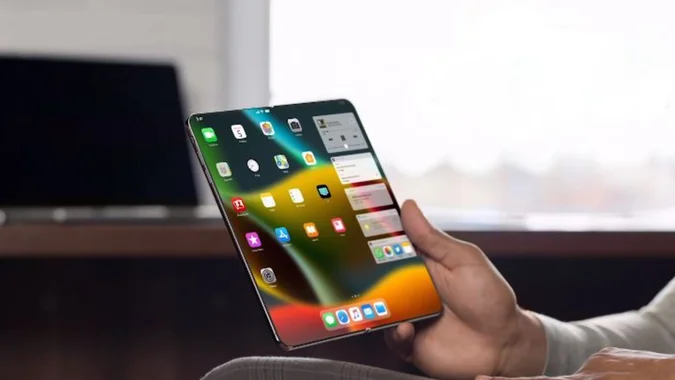
Imagine pulling a device from your pocket that unfolds to reveal a screen nearly matching your iPad mini. That’s the promise of Apple’s long-rumored foldable iPhone, and newly leaked CAD renders give us our clearest look yet at what the company has been cooking up. Codenamed V68 and reportedly targeting a September 2026 launch, this isn’t just another foldable. It’s Apple’s calculated entry into a category it’s watched evolve for years, and the details suggest they’ve been taking notes.
| Metric | Value | Unit | Notes |
|---|---|---|---|
| Outer Display Size | 5.5 | inch | 83.8mm wide x 120.6mm tall when folded |
| Inner Display Size | 7.76 | inch | 167.6mm x 120.6mm unfolded |
| Inner Display Resolution | 2,713 x 1,920 | pixels | Near iPad mini dimensions for apps |
| Thickness (Folded) | 9.6 | mm | Including hinge mechanism |
| Thickness (Unfolded) | 4.8 | mm | Excluding camera bump |
| Frame Material | Titanium & Aluminum | — | Mixed construction for durability |
| Target Launch | September 2026 | — | Codenamed V68 |
The Display That Could Change Everything
What immediately stands out in these leaks is Apple’s apparent solution to the foldable display’s Achilles heel, the crease. While competitors have made progress, Apple seems to have thrown engineering weight at achieving what many thought impossible, a truly crease-free experience. The secret appears to be laser-drilled microstructures in the display layers, a technique that maintains panel integrity while allowing the flexible OLED to bend without creating that visible line down the middle.
This isn’t just about aesthetics. That uninterrupted 7.76-inch canvas, with its 2,713 by 1,920 resolution, essentially gives you an iPad mini screen that folds in half to fit in your pocket. Think about using split-screen apps for research, taking handwritten notes with an Apple Pencil, or watching movies without that distracting seam. It’s a different kind of mobile productivity, one that bridges the gap between phone and tablet in a way current slab phones simply can’t.
The engineering behind this display likely draws from advanced manufacturing techniques similar to those powering the next generation of premium TVs. While Samsung pursues micro-RGB technology for its high-end displays, Apple’s approach with laser-drilled structures suggests a different path to visual perfection.
Design Philosophy: Substance Over Slimness
Here’s where Apple’s strategy becomes clear. The leaked dimensions show the V68 measures 9.6mm thick when folded and 4.8mm when open. Compare that to Samsung’s Galaxy Z Fold 7 at 8.9mm closed and 4.2mm open, and you’ll notice Apple’s device is slightly thicker. But that extra millimeter tells a story.
Apple appears to be prioritizing a robust, crease-free experience over chasing the absolute thinnest profile. The mixed titanium and aluminum frame suggests serious attention to durability, something foldable owners deeply care about. That wider, squarer profile when folded also feels intentional. It’s less like a tall, narrow traditional phone and more like a mini tablet folded in half, which actually makes it easier to grip horizontally and use one-handed when closed.
This design directly addresses one of the biggest complaints about current foldables, those awkwardly tall outer displays that feel unbalanced in the hand. Apple’s approach suggests they’ve listened to user feedback rather than just copying what’s already on the market.
Camera and Daily Experience
On the imaging front, the leaks point to a dual rear camera setup similar to what we expect from the iPhone 17. That means quality over quantity, with Apple likely focusing on computational photography improvements rather than adding more lenses. The inner screen reportedly features an under-display selfie camera with no visible notch or punch-hole, creating that truly seamless canvas for media consumption and video calls.
Think about your daily workflow. You’re commuting and need to quickly reply to messages, the 5.5-inch outer display handles that perfectly. Then you arrive at a cafe, unfold the device, and suddenly you have a proper split-screen setup for researching while writing emails. The transition feels natural, like moving from a notebook to a full-sized journal.
The Competitive Landscape
Apple’s entry into foldables comes after years of watching Samsung refine the category. While Samsung continues to push the boundaries of thinness with devices like the rumored Galaxy Z Flip 8, Apple seems focused on perfecting the fundamentals first. That crease-free display, durable hinge mechanism, and thoughtful ergonomics suggest they’re aiming for the premium experience Apple users expect, even if it means arriving later to the party.
The timing is also interesting. A September 2026 launch gives Apple nearly two more years of development, and in the fast-moving world of consumer electronics, that’s an eternity. It suggests they’re not rushing to market but waiting until they can deliver something that meets their notoriously high standards.
Supply Chain Realities and What It Means for You
Here’s where industry experience provides crucial context. Manufacturing a device this complex, especially with novel display technology, presents massive production challenges. Early adopters should prepare for potential scarcity, as Apple’s foldable iPhone could face serious supply constraints well into 2027. The laser-drilled microstructure technique for the display alone represents a manufacturing hurdle that could limit initial volumes.
From a consumer perspective, this device represents more than just new hardware. It’s about rethinking how we use mobile technology. The pocketable iPad mini concept isn’t just marketing speak, it’s a fundamental shift in what we expect from our primary computing device. For professionals who’ve longed for tablet-level productivity in a phone-sized package, or creatives who want a sketchpad that fits in their jacket, this could be the device that finally delivers.
Apple’s approach with the V68 suggests they’ve learned from the entire industry’s foldable journey. Rather than chasing specs or thinness records, they appear focused on solving the real pain points, creating a device that doesn’t just fold, but folds in a way that genuinely enhances how we work and create. If these leaks prove accurate, September 2026 can’t come soon enough for anyone who’s been waiting for foldable technology to mature into something truly seamless.