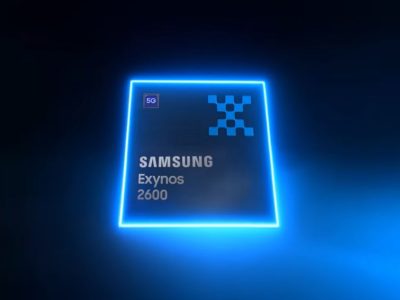
Remember when you’d buy a Galaxy phone and cross your fingers, hoping you got the Snapdragon version instead of the Exynos model? Those days might finally be coming to an end. A fresh leak detailing Samsung’s upcoming Exynos 2600 chipset paints a picture of a processor so capable, it could convince the company to ditch Qualcomm’s silicon entirely for its next flagship. We’re talking about a chip that doesn’t just close the performance gap, it might actually leapfrog the competition.
| Metric | Value | Unit | Notes |
|---|---|---|---|
| Manufacturing Process | 2 | nm | Samsung’s most advanced node to date |
| CPU Configuration | 10-core | — | 1x X930, 3x A730, 4x A720, 2x A520 cores |
| Prime Core Clock | 3.75 | GHz | Cortex-X930 performance core |
| GPU Architecture | Xclipse 960 | — | Based on AMD RDNA technology |
| NPU Performance | 80 | TOPS | Trillion operations per second for AI tasks |
| Mid-Core Clock | 3.3 | GHz | Three Cortex-A730 cores |
| Efficiency Core Clock | 2.9 | GHz | Four Cortex-A720 cores |
| Low-Power Core Clock | 2.2 | GHz | Two Cortex-A520 cores |
| Expected Device | Galaxy S26 | — | Potential global rollout beyond South Korea |
| Target Price Point | $799 | USD | Competitive flagship pricing |
The Architecture That Could Change Everything
Let’s break down what those numbers in the table above actually mean for your daily phone experience. That 2nm manufacturing process is the secret sauce. Think of it like building a city with narrower streets and smaller buildings, everything fits closer together so signals travel faster while using less power. It’s the most advanced chipmaking technology Samsung has ever deployed in a mobile processor.
The ten core CPU setup is brilliantly balanced. You’ve got that single Cortex X930 core screaming along at 3.75GHz for when you need instant app launches or buttery smooth scrolling. Then three A730 cores at 3.3GHz handle the heavy multitasking, like running navigation while streaming music and taking a call. Four A720 efficiency cores manage background tasks at 2.9GHz, and two A520 cores at 2.2GHz handle the absolute lowest power duties to preserve battery.
What’s truly exciting is how this architecture addresses the thermal throttling that plagued earlier Exynos chips. Picture this, you’re halfway through an intense gaming session on your commute home, the phone should be getting warm and slowing down to protect itself. With this new design, that performance stays consistent because the heat gets managed better across all those different cores working in harmony.
AI That Works While You Do
That 80 TOPS NPU rating isn’t just a big number to brag about. It translates to real world benefits you’ll notice immediately. Imagine editing a photo and wanting to remove an unwanted photobomber in the background. Instead of waiting for cloud processing or watching a progress bar crawl across your screen, the object simply vanishes as soon as you highlight it. Live translation during video calls happens without awkward pauses, making international conversations flow naturally.
The efficiency gains from the 2nm process mean these AI features don’t murder your battery. You could use advanced photo editing tools throughout the day and still have plenty of juice left for your evening commute. It’s the kind of practical power that changes how you interact with your device, moving AI from a marketing checkbox to an actually useful tool.
A Graphics Leap Forward
Samsung’s partnership with AMD continues to pay dividends with the Xclipse 960 GPU. Built on AMD’s RDNA architecture, the same technology that powers many gaming PCs, this graphics processor promises console quality visuals on your phone. Games will look sharper, run smoother, and maintain higher frame rates for longer periods.
But it’s not just about gaming. That GPU muscle also accelerates video editing, makes augmented reality experiences more immersive, and helps with complex visual computations for photography. When you’re shooting 8K video or using that rumored 200MP camera sensor, the Xclipse 960 ensures everything processes quickly without turning your phone into a hand warmer.
The Consumer Experience Revolution
Here’s where all this technical wizardry translates to your daily life. With this level of efficiency, Samsung could finally deliver on the promise of all day battery life even with heavy usage. You’re a commuter who forgets their charger at home, no problem. You’re a content creator editing videos on the go, the phone keeps up. The days of midday charging anxiety could genuinely become a thing of the past.
There’s also the consistency factor. If Samsung rolls this chip out globally in the Galaxy S26 lineup, it means everyone gets the same performance regardless of where they buy their phone. No more forum threads debating which region gets the better chip, no more import hassles for enthusiasts wanting the Snapdragon version. It levels the playing field in a way we haven’t seen since the early Galaxy S days.
The Bigger Picture for Samsung
From an industry perspective, this move makes tremendous sense. Reducing reliance on Qualcomm gives Samsung more control over its supply chain, release schedules, and profit margins. It’s the same vertical integration strategy Apple has used successfully for years with its A-series chips. When you design both the hardware and the silicon, everything works together more harmoniously.
The potential cost savings could also mean more competitive pricing. That rumored $799 starting price for the Galaxy S26 would undercut many current flagships while delivering what appears to be top tier performance. It’s a win win, Samsung strengthens its semiconductor business while giving consumers better value.
This development comes at a fascinating time in the mobile industry. While some brands are pushing AI features that require constant cloud connectivity, Samsung’s approach with the Exynos 2600 emphasizes on device intelligence. It’s a philosophical difference that matters, your data stays on your phone, features work offline, and everything happens faster without waiting for server responses. It reminds me of the growing sentiment among some users who prefer simpler, more responsive experiences over flashy cloud dependent gimmicks.
What This Means for Your Next Phone
If these leaks prove accurate, the Galaxy S26 could represent a turning point not just for Samsung, but for the Android flagship market as a whole. We’re looking at a device that promises consistent global performance, genuinely useful AI that doesn’t compromise battery life, and graphics capabilities that blur the line between mobile and console gaming.
The proof will ultimately be in the hands on experience. Will Samsung finally solve the thermal management issues that haunted earlier Exynos chips? Will real world battery life match the theoretical efficiency gains of the 2nm process? These are the questions that will determine if the Exynos 2600 lives up to its potential.
But based on what we’re seeing in these leaks, there’s legitimate reason for excitement. Samsung appears to have learned from past missteps and created a chip that addresses the specific complaints users had about previous Exynos versions. It’s not just about matching the competition anymore, it’s about setting a new standard for what an Android flagship processor can be. And if they pull it off, your next Galaxy phone might just be the most consistent, capable, and consumer friendly device the company has ever made.