| Metric | Value | Unit | Notes |
|---|---|---|---|
| Outer Display Size | 5.5 | inch | 83.8mm x 120.6mm, wider-than-tall orientation |
| Inner Display Size | 7.76 | inch | 167.6mm x 120.6mm, 2,713 x 1,920 resolution |
| Folded Thickness | 9.6 | mm | Closed profile, excluding camera bump |
| Unfolded Thickness | 4.8 | mm | Open profile, thinner than iPhone Air |
| Frame Material | Titanium/Aluminum | — | Mixed construction for durability |
| Rear Cameras | Dual | — | Similar setup to iPhone 17, quality focus |
| Front Camera | Under-display | — | No visible notch on inner screen |
| Expected Launch | September 2026 | — | Codenamed V68, first Apple foldable |
Picture this. You’re sitting in a coffee shop, trying to read a document on your phone while jotting down notes. Your thumb aches from scrolling, and you’re constantly zooming in and out. Now imagine unfolding a device that transforms from a pocket-friendly phone into a proper mini tablet, with enough screen real estate to actually work on. That’s the promise of Apple’s long-rumored foldable iPhone, and thanks to some leaked CAD renders, we’re getting our first real look at what could be the most significant iPhone redesign in years.
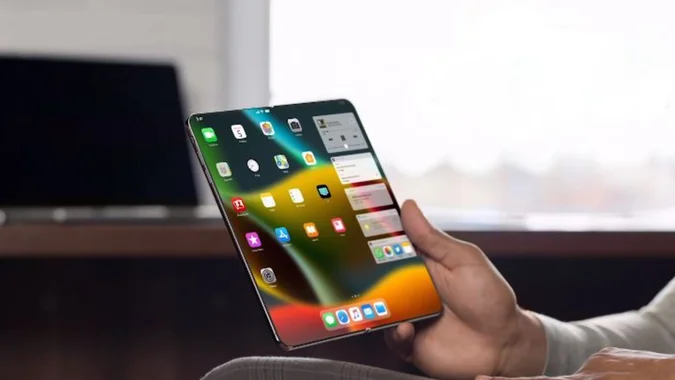
The leaked documents, sourced from iPhone-Ticker.de, reveal a device codenamed V68 that feels less like a traditional smartphone and more like an iPad mini that’s been cleverly folded in half. When closed, it measures 83.8mm wide by 120.6mm tall, with a 5.5-inch outer display that adopts a wider-than-tall orientation. This isn’t just a design quirk, it’s a thoughtful ergonomic choice. The squarer profile slips into side pockets more comfortably than today’s towering slabs, and it gives you a better grip for one-handed use when you’re just checking notifications or taking a quick photo.
The Magic Unfolds
Open it up, and that’s where things get really interesting. The inner screen expands to 167.6mm by 120.6mm, delivering a 7.76-inch canvas with a sharp 2,713 by 1,920 resolution. For context, that’s nearly identical to the screen area of an iPad mini. You’re looking at a device that can handle split-screen apps, proper note-taking, or media consumption without constantly feeling cramped.
What’s truly remarkable is the thickness, or rather, the lack of it. When unfolded, the device measures just 4.8mm thin, excluding the camera bump. That’s actually thinner than even the ultra-slim iPhone Air. When folded, it comes in at 9.6mm thick. Now, if you’re comparing those numbers to something like Samsung’s Galaxy Z Fold 7 at 8.9mm closed and 4.2mm open, you might think Apple is playing catch-up. But here’s the thing, Apple appears to be making a deliberate trade-off.
The Crease-Free Promise
That extra millimeter or so of thickness accommodates what might be Apple’s secret weapon, a truly crease-free display. According to the leaks, Apple is using laser-drilled microstructures in the display assembly, an engineering approach that Samsung reportedly couldn’t crack. This isn’t about being the absolute thinnest foldable on the market, it’s about delivering a seamless, uninterrupted viewing experience. If these renders are accurate, Apple is prioritizing screen quality over chasing spec sheet bragging rights, a philosophy that has served them well in the past.
The build quality sounds equally impressive. The frame uses a mixed titanium and aluminum construction, which should offer that premium, solid feel Apple is known for while maintaining durability. It’s the kind of material choice that makes a device feel substantial in your hand without being overly heavy.
Cameras and Daily Use
On the camera front, the leaks point to a dual rear setup similar to what we expect from the iPhone 17, prioritizing sensor quality and computational photography over simply adding more lenses. The inner screen features an under-display selfie camera, meaning no visible notch or punch-hole to interrupt your viewing experience when you’re watching videos or reading articles.
Think about your daily routine with a device like this. Morning commute? Use the compact outer screen for quick messages and music control. Lunch break? Unfold it to read articles or watch videos on a proper tablet-sized display. Evening planning? Split the screen between your calendar and notes app. The wider folded form factor actually makes it easier to use horizontally, whether you’re typing with two thumbs or watching content on the go.
This detailed look at Apple’s foldable ambitions suggests the company has been studying the foldable market carefully, learning from both the successes and mistakes of early adopters. They’re not rushing to be first, they’re waiting to get it right.
The Competitive Landscape
When this device eventually hits the market, likely in September 2026 according to the leaks, it will enter a space where Samsung has been the dominant player for years. Samsung’s foldables have evolved significantly, with the latest Galaxy Z Flip 8 rumors pointing to even thinner designs. But Apple’s approach seems different. Where Samsung has focused on pushing the limits of thinness, Apple appears willing to add a bit of bulk to solve the crease problem that has plagued foldables since their inception.
This isn’t just about hardware, either. The real test will be how iOS adapts to this new form factor. Apple’s software integration has always been a key strength, and watching how they handle app continuity, multitasking gestures, and the transition between folded and unfolded states will be fascinating. If anyone can make foldable software feel intuitive and polished, it’s probably Apple.
Supply Chain Realities
Of course, seeing these renders and actually getting your hands on the device are two very different things. The consumer electronics supply chain is incredibly complex, especially for cutting-edge display technology. As we’ve seen with reports of potential supply constraints for Apple’s first foldable, even if the design is finalized, manufacturing at scale presents its own challenges. If these leaks are accurate and the September 2026 timeline holds, we could be looking at limited availability and potentially high demand that outstrips supply initially.
From an industry perspective, Apple’s entry into the foldable market is significant not just for what it means for iPhone users, but for the entire category. It validates foldable technology as more than a niche experiment and could accelerate innovation across the board. Component suppliers, app developers, and competing manufacturers will all be watching closely.
The Bottom Line
What we’re seeing in these leaked CAD renders is a device that feels thoughtfully designed rather than hastily assembled. The focus on a crease-free experience, the ergonomic considerations in the folded form factor, and the commitment to build quality all point to Apple doing what Apple does best, entering a category late but with a product that feels polished and complete.
For consumers, the appeal is clear. You get the portability of a smartphone with the screen real estate of a small tablet, all wrapped in Apple’s typically excellent build quality and software integration. The pocket-sized iPad mini experience isn’t just marketing speak, it’s a legitimate use case that could change how people use their devices daily.
We’re still a couple of years out from seeing this device in stores, and as with any leak, details could change. But if these renders are anywhere close to the final product, Apple’s first foldable iPhone could be worth the wait. It’s not about being the thinnest or having the most cameras, it’s about creating a device that disappears when you’re using it, that feels natural in your hand and your pocket, and that actually makes your digital life easier rather than more complicated. And honestly, that’s what good technology should do.