Xiaomi just dropped another surprise on the global stage, and it’s one of those moments where you have to do a double take at the price tag. The Redmi Note 15 has officially made its way to international markets, serving as the entry point to Xiaomi’s latest Note 15 series while the Pro+ model handles the premium duties. What we have here isn’t just another budget phone, it’s a carefully calculated move that challenges what we expect from affordable smartphones.
| Metric | Value | Unit | Notes |
|---|---|---|---|
| Display Size & Type | 6.77 | inch | AMOLED panel with curved edges |
| Processor (SoC) | Snapdragon 6 Gen 3 | — | 4nm process, mid-range efficiency focused |
| RAM Configuration | 12 | GB | Recommended variant for smooth multitasking |
| Battery Capacity | 5,520 | mAh | Large cell for extended daily use |
| Wired Charging | 45 | W | Fast charging support included |
| Main Camera Sensor | 108 | MP | High-resolution primary shooter |
| Ultra-wide Camera | 8 | MP | For wider landscape and group shots |
| Front Camera | 20 | MP | Selfie and video call camera |
| IP Rating | IP66 | — | Dust tight; protected against powerful water jets |
| Software | Android 15 | — | With Hyper OS 2 skin on top |
Design That Belies Its Price
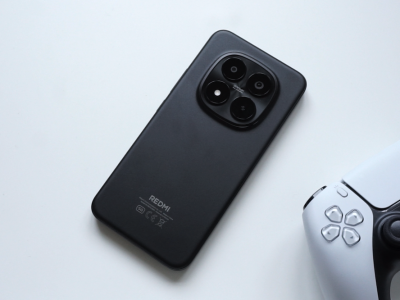
If you’ve handled last year’s Redmi Note 14 Pro, the Note 15 will feel instantly familiar in your hand. Xiaomi has carried forward that successful curved display and rear panel design, complete with the distinctive large camera island that’s become something of a signature for the series. The plastic chassis doesn’t scream premium at first glance, but here’s the thing, it’s rated for IP66 protection. That means you’re getting dust-tight construction and protection against powerful water jets, something you rarely see at this price point.
The curved edges aren’t just for show, either. They make that 6.77-inch AMOLED screen feel more immersive, and they improve one-handed usability. You won’t find the same haptic feedback quality as thousand-dollar flagships, but the vibration motor is surprisingly decent for basic notifications and typing feedback.
Display Quality That Surprises
Let’s talk about that screen for a moment. A 6.77-inch AMOLED panel in a budget phone isn’t unheard of these days, but the implementation matters. Xiaomi typically sources these displays from Chinese manufacturers like BOE or Tianma, and they’ve gotten remarkably good at tuning them for decent color accuracy and brightness. You’re not getting LTPO technology or 120Hz refresh rates here, but for everyday scrolling, video watching, and social media browsing, it’s more than adequate.
The curved edges do introduce some light reflections at extreme angles, but they also give the phone a more premium hand feel. It’s one of those design choices that makes the budget phone that doesn’t feel like one actually live up to that promise.
Performance: Understanding the Snapdragon 6 Gen 3
Now, the Snapdragon 6 Gen 3 chip inside tells you exactly where this phone sits in the market. Qualcomm designed this processor specifically for the budget to mid-range segment, built on a 4nm manufacturing process for better power efficiency. Think of it this way, it’s not going to crush benchmark scores or handle intensive gaming at maximum settings, but for everyday tasks, social media, streaming, and light gaming, it’s perfectly capable.
Here’s where Xiaomi’s configuration choice becomes important. They’re offering a 12GB RAM variant, and if you’re considering this phone, that’s the version to get. In 2024, 12GB gives you proper multitasking headroom and future-proofs the device against increasingly demanding apps. The difference in daily smoothness between 8GB and 12GB is noticeable, especially if you like keeping multiple apps open in the background.
Camera System: More Than Megapixels
Picture this, you’re out with friends as the sun begins to set, and someone wants to capture the moment. The Redmi Note 15’s 108MP main sensor has the resolution to capture plenty of detail, but megapixels are only part of the story. Xiaomi’s camera software does the heavy lifting with computational photography, combining multiple pixels into one for better low-light performance.
The 8MP ultra-wide gives you flexibility for landscapes or group shots, while the 20MP front camera handles selfies and video calls. It’s a practical setup that covers most everyday photography needs without overcomplicating things. For a deeper look at what this camera system can do, check out our Redmi Note 15 Pro Plus hands-on where we tested similar imaging hardware.
Battery Life That Gets You Through
That 5,520mAh battery capacity in the metrics table above isn’t just a number, it’s a full day of use with room to spare. Combine it with the power-efficient Snapdragon 6 Gen 3, and you’re looking at a phone that can easily last from morning to night on a single charge. The 45W charging means you can top up quickly when needed, getting you from empty to a usable percentage in about 30 minutes.
On the software side, Android 15 layered with Hyper OS 2 brings the latest features and security updates. Xiaomi’s software support has improved over the years, though it still lags behind Google’s Pixel commitment. You can expect a couple of major OS updates and regular security patches, which is reasonable for this price segment.
The Bigger Picture
What Xiaomi is doing with the Redmi Note 15 represents a shift in the budget smartphone landscape. They’re not just cutting corners to hit a price point, they’re making strategic decisions about where to invest. The IP66 rating, large AMOLED display, and substantial battery are features that impact daily usability more than having the absolute fastest processor.
When you compare this to global competitors in the same price range, the value proposition becomes clear. You’re getting better build protection, a larger and higher-quality display, and more camera flexibility than many alternatives. It’s part of why the Redmi Note 15 hits global markets as a budget powerhouse that challenges expectations.
The Redmi Note 15 proves that budget phones don’t have to feel cheap or compromised. With thoughtful design choices, practical feature selection, and Xiaomi’s supply chain efficiency, it delivers where it matters most for everyday users. It won’t satisfy hardcore gamers or photography enthusiasts looking for flagship performance, but for the vast majority of smartphone users who want reliability, good battery life, and solid everyday performance without breaking the bank, it’s a compelling option that deserves a close look.