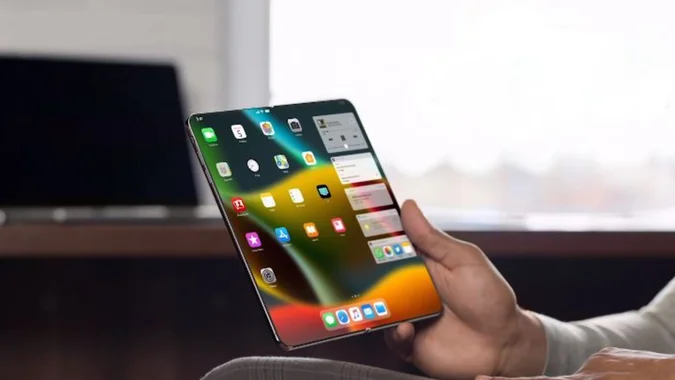
Imagine pulling an iPad mini from your pocket. That’s the promise behind Apple’s latest leaked CAD renders, showing a foldable iPhone that transforms from a compact 5.5-inch device into a 7.76-inch tablet experience. According to the Apple’s foldable iPhone CAD leak, this device, codenamed V68, represents Apple’s long-awaited entry into the foldable market with a September 2026 target launch. What makes this leak particularly compelling isn’t just the folding mechanism, but how Apple appears to have solved the crease problem that’s plagued competitors for years.
| Metric | Value | Unit | Notes |
|---|---|---|---|
| Outer Display Size | 5.5 | inch | 83.8mm x 120.6mm when folded |
| Inner Display Size | 7.76 | inch | 167.6mm x 120.6mm unfolded |
| Inner Display Resolution | 2,713 x 1,920 | pixels | Nearly matches iPad mini density |
| Thickness (Folded) | 9.6 | mm | Includes hinge mechanism |
| Thickness (Unfolded) | 4.8 | mm | Excluding camera bump |
| Frame Material | Titanium + Aluminum | — | Mixed construction for durability |
| Camera System | Dual Rear | — | Similar to iPhone 17 setup |
| Front Camera | Under-Display | — | No visible notch or hole-punch |
| Expected Launch | September 2026 | — | Based on current timeline |
The Pocket-Sized iPad Mini
What strikes you first about these CAD renders is the proportions. When folded, the device measures 83.8mm wide by 120.6mm tall, creating a wider-than-tall orientation that actually slips into side pockets better than today’s towering smartphone slabs. That 5.5-inch outer display gives you enough real estate for quick notifications, messages, and basic tasks without feeling cramped.
But unfold it, and magic happens. The screen expands to 167.6mm by 120.6mm, delivering a 7.76-inch canvas with 2,713 by 1,920 resolution. That’s nearly identical to an iPad mini’s viewing area, perfect for split-screen apps, note-taking, or watching videos during your commute. Picture this: you’re on a flight, tired of squinting at your phone. One smooth unfolding motion, and suddenly you’ve got a proper tablet for movies or work.
Engineering the Crease-Free Experience
Here’s where Apple’s engineering philosophy shines through. While Samsung’s Galaxy Z Fold 7 measures 8.9mm closed and 4.2mm open, Apple’s design comes in slightly thicker at 9.6mm folded and 4.8mm unfolded. That extra millimeter matters, because it accommodates the laser-drilled microstructures that create what appears to be a truly crease-free display.
From my experience in consumer electronics supply chains, this isn’t just about being thin for thin’s sake. Apple seems to have prioritized display quality over absolute slimness, using that extra space for hinge engineering that distributes stress more evenly across the flexible OLED panel. The mixed titanium and aluminum frame suggests they’re balancing weight, durability, and cost, with titanium likely reinforcing the hinge area where stress concentrates.
The result? A crease-free iPad mini experience that could finally deliver what foldable enthusiasts have wanted since the category began: a large screen that doesn’t remind you it folds every time you look at it.
How It Compares to Samsung
Let’s talk about the elephant in the room. Samsung has been refining foldables for years, but Apple appears to be taking a different approach entirely. The wider folded stance creates a squarer profile that feels less like a traditional phone and more like a mini tablet folded in half. This design choice actually makes sense for daily use.
When closed, that wider body is easier to grip horizontally and enables better one-handed use. It addresses the common complaint about tall, narrow outer displays on competing foldables that can feel awkward in the hand. Open it up, and you get a display ratio that’s closer to traditional tablets, making content consumption and productivity tasks feel more natural.
Camera-wise, Apple seems to be prioritizing quality over quantity with a dual rear setup similar to the iPhone 17. The inner screen features an under-display selfie camera with no visible notch or hole-punch, creating an uninterrupted viewing experience. Think about watching a movie or video calling without that distracting camera cutout breaking your immersion.
Design and Daily Ergonomics
From an ergonomics perspective, this design could be a game-changer. The wider folded form factor means it won’t feel like you’re holding a narrow remote control when using the outer display. For quick tasks like checking messages, taking photos, or using Apple Pay, that extra width provides more stability and comfort.
Unfolded, the 7.76-inch screen hits a sweet spot between portability and usability. It’s large enough for proper multitasking with split-screen apps, but not so large that it becomes unwieldy. The 4.8mm thickness when open (excluding the camera bump) beats even the ultra-slim iPhone Air, making it feel premium in hand without sacrificing structural integrity.
What’s particularly interesting about this foldable iPhone leak is how it reflects Apple’s typical approach: wait, observe competitors’ mistakes, then enter the market with a refined solution. They’ve clearly studied what works and what doesn’t in the foldable space.
What This Means for Apple’s Strategy
If these CAD renders are accurate, Apple’s first foldable iPhone represents more than just another product category expansion. It’s a statement about how Apple views the future of mobile computing. By creating a device that bridges the gap between phone and tablet, they’re potentially redefining what a pocket computer can be.
The September 2026 timeline gives Apple plenty of time to refine the engineering, particularly around durability testing and software optimization. iOS will need significant adaptations for foldable workflows, from app continuity when folding/unfolding to new multitasking paradigms that leverage the larger screen.
From a market perspective, this could be the device that finally brings foldables into the mainstream. Apple’s brand power combined with what appears to be genuine innovation in display technology might convince consumers who’ve been hesitant about foldables due to durability concerns or visible creases.
The Bottom Line
While we’re still looking at leaked CAD renders rather than official announcements, the details here suggest Apple is approaching foldables with their characteristic attention to user experience. The pocket-sized iPad mini concept isn’t just marketing speak, it’s a tangible design philosophy that could make foldables feel less like a compromise and more like an upgrade.
For consumers, this means potentially getting tablet-level productivity in a device that actually fits in your pocket. For the industry, it represents Apple throwing their considerable weight behind a category that’s been searching for mainstream acceptance. If they can deliver on the promise of a crease-free display with iPad mini-like usability, the September 2026 launch could mark a significant turning point in how we think about mobile devices.
As always with leaks, take these details with cautious optimism. But if even half of what these CAD renders suggest comes to fruition, Apple’s foldable iPhone might just be worth the wait.