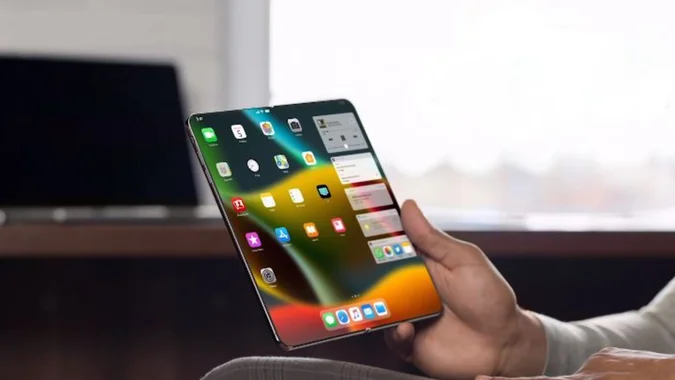
Imagine slipping an iPad mini into your pocket, then unfolding it whenever you need a proper screen for work or play. That’s the promise emerging from leaked CAD files showing Apple’s first foldable iPhone, codenamed V68. After years of watching Samsung and others refine the foldable form factor, Apple appears ready to enter the arena with a device that prioritizes a seamless, crease-free experience over being the absolute thinnest. What we’re seeing suggests Apple learned from every competitor’s misstep before committing to its design.
| Metric | Value | Unit | Notes |
|---|---|---|---|
| Outer Display Size | 5.5 | inch | 83.8mm wide × 120.6mm tall when folded |
| Inner Display Size | 7.76 | inch | 167.6mm × 120.6mm unfolded |
| Inner Display Resolution | 2,713 × 1,920 | pixels | Near iPad mini pixel density |
| Thickness (Folded) | 9.6 | mm | Including camera bump |
| Thickness (Unfolded) | 4.8 | mm | Excluding camera bump |
| Frame Material | Titanium + Aluminum | — | Mixed construction for durability |
| Rear Camera System | Dual | — | Similar to iPhone 17 setup |
| Front Camera | Under-Display | — | No visible notch or punch-hole |
| Expected Launch | September 2026 | — | Subject to production timelines |
The Design Philosophy: Pocket-Friendly Tablet
When you first pick up Apple’s foldable iPhone, the immediate impression won’t be of a phone that folds. It’ll feel more like a mini tablet that happens to fold in half. The 5.5-inch outer display measures 83.8mm wide by 120.6mm tall, creating a wider-than-tall orientation that slips into side pockets with surprising ease. Compare that to today’s towering smartphone slabs that often require careful positioning, and you start to appreciate the practical thinking here.
Unfold it, and the device transforms into a 7.76-inch screen measuring 167.6mm across. That’s nearly identical to an iPad mini’s display area, meaning you get proper split-screen app layouts, comfortable note-taking space, and media consumption that doesn’t feel compromised. The 2,713 by 1,920 resolution ensures text stays crisp whether you’re reading documents or browsing websites.
Display Technology: The Crease-Free Promise
Here’s where Apple’s engineering approach diverges from what we’ve seen elsewhere. The leaked CAD files reveal the company is prioritizing a truly crease-free display experience over chasing the absolute thinnest profile. At 4.8mm when unfolded (excluding the camera bump), it’s actually slightly thicker than Samsung’s Galaxy Z Fold 7 at 4.2mm. But that extra millimeter accommodates laser-drilled microstructures in the display layer that Samsung reportedly couldn’t perfect.
Think about running your finger across the screen. With most foldables, you feel that central ridge where the display bends. Apple’s approach aims to eliminate that tactile feedback entirely, creating a surface that feels uniformly smooth from edge to edge. For anyone who’s used foldables for extended reading or drawing sessions, this could be the difference between “interesting tech” and “daily driver.”
Build Quality and Materials
The mixed titanium and aluminum frame represents a thoughtful balance between weight, durability, and cost. Titanium provides the structural rigidity needed for thousands of folding cycles, while aluminum keeps the overall mass manageable. At 9.6mm thick when folded, the device feels substantial without being chunky, and that squared-off profile actually makes it easier to grip horizontally.
One-handed use when closed becomes genuinely practical, something that’s been a consistent complaint about tall, narrow outer displays on competing foldables. You can actually thumb-type on that 5.5-inch screen without constantly adjusting your grip.
Camera System: Quality Over Quantity
Apple appears to be taking a conservative approach with the camera system, opting for a dual rear setup similar to what we expect from the iPhone 17. That means prioritizing sensor quality and computational photography over adding extra lenses just for the spec sheet. The inner screen features an under-display selfie camera with no visible notch or punch-hole, creating an uninterrupted viewing experience for video calls and content consumption.
Imagine watching a movie on that 7.76-inch display without any camera cutout interrupting the image. Or video conferencing with colleagues where your face appears naturally framed, not awkwardly positioned around a visible camera module. These are the subtle user experience details that often get overlooked in spec comparisons but matter tremendously in daily use.
How It Stacks Up Against the Competition
Compared to Samsung’s foldable efforts, Apple’s approach represents a different philosophy. Samsung’s Galaxy Z Fold 7 measures 8.9mm closed and 4.2mm open, making it technically thinner. But Apple seems willing to accept slightly more thickness to deliver that crease-free experience. It’s the classic Apple trade-off: optimize for the user experience first, then work backward to the specifications.
The wider folded stance also creates a different ergonomic profile. Where Samsung’s foldables feel like phones that unfold into tablets, Apple’s design feels like a mini tablet that folds into a pocketable form factor. Which approach you prefer comes down to personal workflow. If you primarily want a phone that occasionally becomes bigger, Samsung’s direction makes sense. If you want a tablet that’s always with you, Apple’s interpretation could be more compelling.
The Consumer Experience
Let’s picture a typical day. You slip the folded device into your jeans pocket in the morning, barely noticing it’s there. During your commute, you unfold it to catch up on news or emails with proper screen real estate. At work, you use split-screen mode to reference documents while taking notes. During lunch, you watch a video without any display crease distracting from the content. After work, you fold it back up for one-handed texting while walking to your car.
That seamless transition between form factors, that absence of compromise at each stage, that’s what Apple appears to be chasing. The company watched for years as competitors worked through the growing pains of foldable technology, learning which trade-offs users would accept and which would frustrate them.
Supply and Availability Realities
With a rumored September 2026 launch timeline, there’s still considerable development and production work ahead. The laser-drilled microstructure technology for the crease-free display represents a manufacturing challenge that could impact initial yields. Industry sources suggest supply constraints might keep the device relatively elusive through its first year, similar to what we’ve seen with other cutting-edge Apple products.
Pricing remains unknown, but given the materials and technology involved, expect it to command a premium over even Apple’s highest-end traditional iPhones. The question becomes whether that premium buys you enough additional utility to justify the cost. For professionals who genuinely need tablet functionality in a pocketable form, the answer might be yes. For casual users, it might require more consideration.
What’s clear from these leaked CAD files is that Apple isn’t just entering the foldable market. The company appears to be redefining what a pocketable tablet can be, prioritizing user experience over spec sheet victories. The result could be a device that doesn’t just fold, but genuinely transforms how we think about mobile productivity and entertainment.