| Metric | Value | Unit | Notes |
|---|---|---|---|
| Outer Display Size | 5.5 | inch | 83.8mm x 120.6mm, wider-than-tall orientation |
| Inner Display Size | 7.76 | inch | 167.6mm x 120.6mm, 2,713 x 1,920 resolution |
| Thickness (Folded) | 9.6 | mm | Including hinge mechanism |
| Thickness (Unfolded) | 4.8 | mm | Excluding camera bump, ultra-slim profile |
| Display Technology | Crease-Free | — | Laser-drilled microstructures, no visible crease |
| Frame Material | Titanium + Aluminum | — | Mixed construction for durability |
| Rear Camera System | Dual | — | Similar to iPhone 17, quality over quantity |
| Front Camera | Under-Display | — | No visible notch, uninterrupted viewing |
| Expected Launch | September 2026 | — | Codenamed V68 |
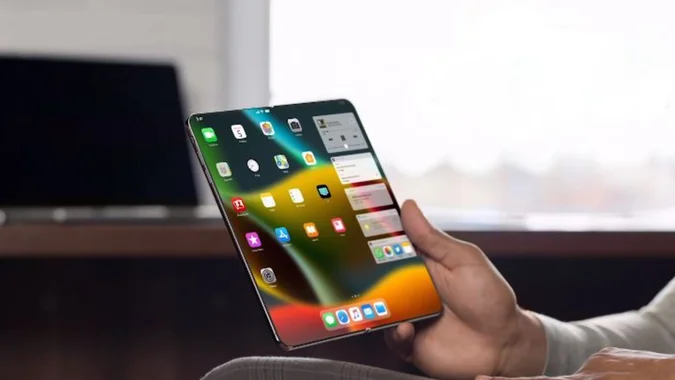
Picture this. You’re slipping a device into your pocket that feels more like a compact notebook than today’s towering smartphone slabs. Then you unfold it, and suddenly you’re holding what amounts to a full iPad mini experience. That’s the promise emerging from the latest Apple’s foldable iPhone CAD leak, and if the leaked renders hold true, Apple might finally be ready to redefine what a pocketable computer can be.
The Pocket-Sized iPad Mini Experience
What makes this leak so compelling isn’t just that Apple is entering the foldable space. It’s how they’re approaching it. While competitors have chased thinness above all else, Apple appears to be prioritizing something more fundamental. A truly crease-free display experience.
The engineering details are fascinating. At 4.8mm thin when unfolded (excluding the camera bump), it’s actually thinner than even the ultra-slim iPhone Air. But here’s the tradeoff. When folded, it measures 9.6mm thick, slightly more than Samsung’s Galaxy Z Fold 7 at 8.9mm. That extra millimeter isn’t wasted space. It’s the engineering margin needed for what could be the industry’s first genuinely crease-free folding display.
Apple’s solution reportedly uses laser-drilled microstructures, a technology that Samsung apparently couldn’t crack. Think of it as microscopic pillars within the display layers that maintain structural integrity during countless folding cycles. The result? A screen that looks and feels like a single, continuous panel rather than two displays with a visible seam down the middle.
Design That Actually Makes Sense in Your Hand
Hold your current smartphone sideways. Notice how tall and narrow it feels? Now imagine that same device, but wider when folded. The leaked CAD shows a 5.5-inch outer display measuring 83.8mm wide by 120.6mm tall. That wider-than-tall orientation changes everything about how the device feels in your hand.
It slips into side pockets more naturally. It’s easier to grip horizontally. When closed, you get better one-handed use because your thumb can actually reach across the display. This addresses one of the most common complaints about current foldables. Their outer screens often feel like afterthoughts, too narrow for comfortable typing or reading.
Unfold it, and you’re looking at a 7.76-inch inner screen with 2,713 x 1,920 resolution. That’s nearly identical to an iPad mini’s display area. For split-screen apps, note-taking, or watching content, you’re getting a tablet experience that genuinely fits in your pocket.
How It Stacks Up Against the Competition
Let’s talk about the elephant in the room. How does Apple’s approach compare to what Samsung has been refining for years? The numbers tell an interesting story. At 9.6mm thick when folded versus Samsung’s 8.9mm for the Galaxy Z Fold 7, Apple’s device is slightly chunkier. Unfolded, it’s 4.8mm versus Samsung’s 4.2mm.
But here’s where Apple’s philosophy shines through. They’re trading absolute thinness for something many users value more. A display without that distracting crease. A mixed titanium and aluminum frame that should feel more substantial. Camera hardware that prioritizes quality over having multiple lenses just for the spec sheet.
The dual rear camera setup appears similar to what we expect from the iPhone 17, focusing on larger sensors and computational photography rather than adding more cameras. The inner screen features an under-display selfie camera with no visible notch, creating that uninterrupted canvas for media consumption. It’s a thoughtful approach that suggests Apple watched the competition’s early stumbles and decided to wait until they could deliver something that feels polished.
The Practical Reality of Owning One
Imagine your typical day. You’re commuting, checking messages on the outer display with one hand. During a meeting, you unfold the device to take notes with plenty of screen real estate. On your lunch break, you watch a video on what feels like a proper tablet. In the evening, you’re reading with the device propped up like a tiny laptop.
This is where Apple’s ecosystem advantage could really shine. Continuity between the folded and unfolded states. Apps that intelligently adapt their layouts. Handoff that actually works seamlessly between iPhone, iPad, and now this hybrid device. It’s not just about hardware. It’s about creating a cohesive experience that fits into how people actually use technology throughout their day.
The mixed titanium and aluminum frame should offer that premium feel Apple is known for, while potentially addressing durability concerns that have plagued some foldables. Titanium provides strength without excessive weight, while aluminum helps with thermal management and overall device balance.
Supply Chain Realities and What to Expect
Now for the sobering part. That September 2026 launch date isn’t just a random guess. It reflects the reality of bringing a device this complex to market. The production challenges for foldable displays, especially with Apple’s ambitious crease-free approach, are substantial.
From industry sources familiar with display manufacturing, creating those laser-drilled microstructures at scale requires precision most factories simply don’t have yet. Yield rates for perfect panels will likely be low initially. Then there’s the hinge mechanism, which needs to survive hundreds of thousands of folds while maintaining that seamless feel.
Apple’s typical approach with new form factors is to start with limited production, refine based on real-world feedback, then scale up. Don’t be surprised if the first generation is both expensive and somewhat difficult to find. This isn’t necessarily a bad thing. It means Apple is taking the time to get it right rather than rushing to market with a half-baked solution.
Looking Ahead to the Foldable Future
What’s most exciting about this leak isn’t just the device itself. It’s what it represents for the broader smartphone market. Apple entering the foldable space validates the category in a way no other manufacturer could. It signals that foldables aren’t just a niche for early adopters anymore. They’re becoming mainstream computing devices.
The competition will need to respond. Samsung has already been refining their approach with devices like the Galaxy Z Fold 7, focusing on thinness and refinement. But Apple’s crease-free display technology could reset expectations for what’s possible. Suddenly, that visible seam down the middle of every other foldable might start looking like a compromise users are less willing to accept.
For consumers, this is all good news. More competition means better products, more innovation, and eventually, more affordable options. Apple’s entry will push the entire industry forward, forcing everyone to up their game on display quality, durability, and software integration.
So while we might need to wait until 2026 to actually hold one of these devices, the leaked CAD gives us a fascinating glimpse into Apple’s thinking. They’re not just making a foldable phone. They’re reimagining what a pocket computer can be. A device that transforms from a compact communication tool into a full-fledged tablet experience, all without that distracting crease reminding you it’s folded in half. If they can deliver on that promise, it might just be worth the wait.