| Metric | Value | Unit | Notes |
|---|---|---|---|
| Outer Display Size | 5.5 | inch | Wider-than-tall orientation when folded |
| Inner Display Size | 7.76 | inch | Unfolded screen, near iPad mini dimensions |
| Inner Display Resolution | 2,713 x 1,920 | pixels | Sharp density for split-screen apps |
| Thickness (Folded) | 9.6 | mm | Includes crease-free engineering |
| Thickness (Unfolded) | 4.8 | mm | Excluding camera bump, thinner than iPhone Air |
| Folded Dimensions | 83.8 x 120.6 | mm | Squarer profile for better pocket fit |
| Unfolded Dimensions | 167.6 x 120.6 | mm | iPad mini comparable workspace |
| Frame Material | Titanium/Aluminum | — | Mixed construction for durability |
| Camera System | Dual Rear | — | Similar to iPhone 17, under-display selfie |
| Target Launch | September 2026 | — | Codenamed V68, pending production realities |
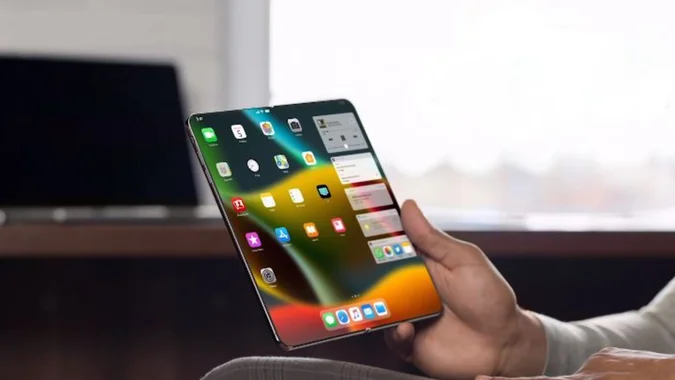
Imagine slipping a device into your side pocket that feels no bulkier than your current phone, then unfolding it to reveal a screen nearly matching your iPad mini. That’s the promise tucked inside the latest CAD leak of Apple’s first foldable iPhone, and honestly, it’s the kind of engineering pivot we’ve been waiting for. The renders, sourced from iPhone-Ticker.de, show a device codenamed V68 that doesn’t just fold, it transforms. When closed, it’s a 5.5-inch slab with a wider, squarer stance that actually fits in pockets designed for human proportions, not towering phablets. Open it up, and you’re looking at a 7.76-inch canvas perfect for split-screen notes or watching a show without squinting.
The Engineering Behind the Seamless Screen
What makes this leak particularly compelling isn’t just the form factor, it’s Apple’s apparent solution to the foldable industry’s most visible flaw, the crease. The CAD files detail a display that uses laser-drilled microstructures to maintain a truly flat surface when unfolded. This isn’t a minor iteration, it’s a fundamental rethinking of how flexible screens can work. The trade off? The device measures 9.6mm thick when folded and 4.8mm when open. That’s slightly thicker than Samsung’s current thinnest foldable champion, but that extra millimeter or so houses the engineering required for a crease-free experience. It’s a classic Apple move, prioritizing a flawless user experience over winning a spec sheet thickness war.
Holding this thing would feel different. The wider folded profile creates a shape that’s less like a narrow candy bar and more like a mini tablet folded in half. This design choice directly addresses years of complaints about tall, awkward outer displays on competing foldables. Your thumb can actually reach across the screen for one handed use when it’s closed. Open it, and the 4.8mm thinness (not counting the camera bump) beats even the slimmest iPhones to date. The mixed titanium and aluminum frame suggests Apple is serious about durability, a critical concern for a moving part that will see thousands of open and close cycles.
How It Stacks Up Against the Foldable Competition
Let’s talk about the Samsung in the room. Compared to the Galaxy Z Fold 7’s 8.9mm closed and 4.2mm open measurements, Apple’s approach is deliberately thicker. But in the world of foldables, thinness has often come at the cost of a visible crease or a less robust hinge. Apple seems to be betting that users will trade a barely perceptible increase in thickness for a display that looks and feels like a single, continuous slab of glass. It’s a bet that makes sense if you’ve ever run your finger over the faint dip in the middle of other foldables and wondered why it has to be there.
The camera setup keeps things practical rather than extravagant. A dual rear system, likely borrowing sensors from the iPhone 17 lineage, focuses on quality over lens count. The real magic happens on the inner screen, where an under-display selfie camera leaves no notch or punch hole to interrupt your view. Picture watching a movie or video calling with zero distractions on the display. It’s these thoughtful details that suggest Apple spent its years on the foldable sidelines not just watching, but meticulously learning what not to do.
The Everyday Reality of Owning Apple’s First Foldable
Think about your daily flow. You pull the device from your pocket, its squarish form factor feeling secure in your hand. A quick glance at the outer display shows notifications. When you need more space, maybe to reference a document while typing an email or to follow a recipe in the kitchen, you unfold it. The hinge action needs to feel premium, with a satisfying, solid snap at the open and closed positions, something Apple’s expertise in precise mechanics should deliver. The 7.76-inch inner screen, with its 2,713 x 1,920 resolution, provides a workspace eerily similar to an iPad mini, a device many already use as a perfect middle ground between phone and laptop.
Battery life will be the million dollar question. Foldables pack two displays and complex mechanics into a tight space, often leaving less room for a large battery. Apple’s chip efficiency, honed over generations of iPhones and iPads, will be its secret weapon here. Pair that with software optimizations that intelligently manage which screen is active and when, and you could have a device that lasts a full day despite its dual-screen nature. The target launch window of September 2026 gives Apple plenty of time to refine both the hardware and the iOS experience tailored for this new form factor. However, as with any ambitious new product line, potential buyers should be aware of the production reality check that often accompanies first generation devices.
Why This Leak Feels Different
Most tech leaks show incremental changes. This one reveals a philosophy. Apple isn’t just making a folding phone, it’s redefining what a pocketable tablet can be. By starting with the goal of a crease-free iPad mini experience, they’ve sidestepped the awkward phase of simply making a phone that gets bigger. The wider outer screen makes it usable when closed. The seamless inner screen makes it productive when open. The materials promise it will last.
For consumers, the value proposition is clear, a single device that collapses your phone and mini tablet into one object. For the industry, it’s a challenge. Samsung, Google, and others have paved the way, but Apple’s entry with this specific design validates the category while raising the bar on display quality and ergonomics. The wait until 2026 might feel long, but if these CAD files translate to a real product that feels this considered in the hand, it could be worth it. This isn’t just another phone leak, it’s a glimpse at how Apple plans to fold the future of personal computing into your pocket.