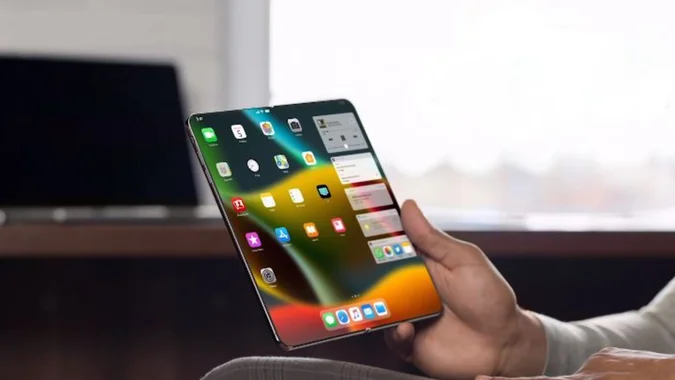
After years of watching Samsung, Google, and others refine the foldable form factor, Apple appears ready to join the party with its own take. Leaked CAD renders of the company’s first folding iPhone, codenamed V68, reveal a device that doesn’t just fold, it transforms. What we’re looking at is essentially an iPad mini experience that collapses down to pocket size, and the engineering choices here tell a fascinating story about how Apple plans to enter a market its competitors have spent years defining.
| Metric | Value | Unit | Notes |
|---|---|---|---|
| Outer Display Size | 5.5 | inch | 83.8mm wide × 120.6mm tall when folded |
| Inner Display Size | 7.76 | inch | 167.6mm × 120.6mm unfolded |
| Inner Display Resolution | 2,713 × 1,920 | pixels | Near iPad mini dimensions for apps |
| Thickness (Folded) | 9.6 | mm | Includes hinge mechanism |
| Thickness (Unfolded) | 4.8 | mm | Excluding camera bump, ultra-slim profile |
| Frame Material | Titanium & Aluminum | — | Mixed construction for durability |
| Rear Camera System | Dual | — | Similar to iPhone 17 setup |
| Front Camera | Under-Display | — | No visible notch on inner screen |
| Expected Launch | September 2026 | — | Codenamed V68, pending supply chain |
The Pocket-Sized iPad Mini Vision
What immediately stands out about Apple’s approach is the focus on creating a device that feels intentional in both its folded and unfolded states. The 5.5-inch outer display measures 83.8mm wide by 120.6mm tall, giving it a wider-than-tall orientation that slips into side pockets more naturally than today’s towering smartphone slabs. It’s a thoughtful design choice that addresses one of the most common complaints about existing foldables, their awkward tall-and-narrow outer screens that can feel cramped for typing or quick interactions.
Unfold the device, and the transformation is genuinely impressive. That compact outer shell expands to reveal a 7.76-inch inner screen with 2,713 by 1,920 resolution, dimensions that nearly match an iPad mini. Imagine having that tablet sized canvas for split screen apps, note taking, or media consumption, then folding it in half to slip into your jeans pocket. It’s the kind of versatility that could actually change how people use their devices throughout the day.
Engineering the Crease-Free Experience
Perhaps the most significant revelation from these CAD leaks is how Apple appears to be tackling the foldable display’s greatest challenge, the visible crease. According to the documentation, the company is using laser drilled microstructures in the display assembly, an approach that Samsung reportedly couldn’t perfect. This engineering choice explains why Apple’s foldable measures slightly thicker than some competitors, 9.6mm when folded compared to Samsung’s Galaxy Z Fold 7 at 8.9mm closed.
That extra millimeter or so accommodates the mechanism needed for what Apple hopes will be a truly crease free viewing experience. It’s a classic Apple trade off, prioritizing quality and user experience over chasing the absolute thinnest possible profile. The mixed titanium and aluminum frame suggests they’re also serious about durability, a critical concern for any device with moving parts that gets daily pocket carry.
When you consider that Samsung continues to push the boundaries with its own thinnest foldable designs, Apple’s slightly thicker approach tells us they’re playing a different game. They’re not trying to win on specs alone, they’re trying to deliver the kind of polished, seamless experience that makes people forget they’re using folding technology at all.
Camera Strategy and Daily Usability
The camera setup follows Apple’s typical philosophy of quality over quantity. A dual rear system similar to what we expect in the iPhone 17 suggests they’re focusing on computational photography and sensor quality rather than adding extra lenses. More interesting is the under display selfie camera on the inner screen, which creates a completely uninterrupted viewing surface for videos, documents, or web browsing.
Think about your typical foldable use case. You’re watching a movie on that expansive inner display, and there’s no notch or hole punch breaking the immersion. You’re video calling with the device unfolded on a table, and the camera sits invisibly within the screen itself. These might seem like small details, but they’re exactly the kind of thoughtful touches that differentiate Apple products in crowded markets.
The wider folded stance also creates a squarer profile that feels less like a traditional phone and more like a mini tablet folded in half. This actually improves one handed use when closed, since the device sits more comfortably in your palm. It’s those ergonomic considerations that often get overlooked in early generation foldables, but Apple appears to have studied the competition’s mistakes carefully.
The 2026 Reality Check
With a rumored September 2026 launch timeline, Apple is giving itself plenty of runway to perfect this first generation foldable. That’s probably wise, given the complex supply chain and manufacturing challenges involved. Industry sources suggest the company might face a major supply crunch that could make these devices difficult to find initially.
The two year window also allows Apple to watch how the foldable market evolves, particularly as display technology continues advancing. We’re seeing incredible innovation in areas like display technology that could influence future iterations of foldable screens.
What’s clear from these leaks is that Apple isn’t rushing to market with a me too product. They’re taking the time to engineer solutions to the problems that have plagued early foldables, the visible crease, the awkward outer screen proportions, the durability concerns. If they can deliver on the promise shown in these CAD renders, a crease free iPad mini experience that actually fits in your pocket, they might just redefine what people expect from foldable devices entirely.
The wait until 2026 might feel long for foldable enthusiasts, but if it means getting a polished, thoughtfully engineered product rather than a first generation experiment, it could be worth it. Apple has always been about entering markets late but right, and these leaks suggest their foldable iPhone could follow that same playbook.