| Metric | Value | Unit | Notes |
|---|---|---|---|
| Outer Display Size | 5.5 | inch | 83.8 x 120.6mm, wider-than-tall orientation |
| Inner Display Size | 7.76 | inch | 167.6 x 120.6mm, 2,713 x 1,920 resolution |
| Thickness (Folded) | 9.6 | mm | Including camera bump |
| Thickness (Unfolded) | 4.8 | mm | Excluding camera bump |
| Frame Material | Titanium + Aluminum | — | Mixed construction for durability |
| Camera System | Dual Rear | — | Similar to iPhone 17 setup |
| Selfie Camera | Under-Display | — | No visible notch on inner screen |
| Target Launch | September 2026 | — | Codenamed V68 |
You know that feeling when you first hold a device that just feels right? The weight distribution, the materials, the way it sits in your hand? That’s the experience Apple seems to be chasing with its long-rumored entry into the foldable phone market. After years of watching Samsung, Motorola, and others refine the folding form factor, leaked CAD renders suggest Apple’s first foldable iPhone isn’t just playing catch-up. It’s aiming to redefine what a pocketable tablet can be.
The Pocket-Sized iPad Mini Experience
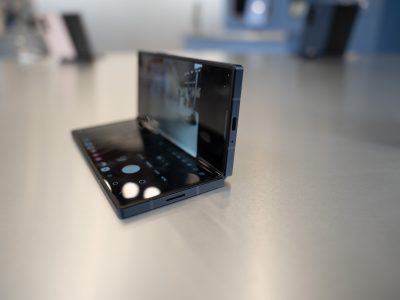
What makes this Apple’s foldable iPhone particularly interesting isn’t just that it folds. It’s how it folds. The leaked dimensions reveal a device that measures 83.8mm wide and 120.6mm tall when closed, creating a wider-than-tall profile that should slip into side pockets more comfortably than today’s towering smartphone slabs. When you unfold it, you’re looking at a 7.76-inch display measuring 167.6 x 120.6mm. That’s nearly identical to an iPad mini’s screen real estate, but it folds in half to fit in your pocket.
Imagine pulling this from your jeans pocket during a commute. Closed, it feels substantial but manageable, with that signature Apple build quality you can practically feel through the titanium and aluminum frame. Then you unfold it with that satisfying mechanical precision Apple is known for, and suddenly you have a proper tablet for reading, note-taking, or split-screen multitasking. The transition feels less like switching between two devices and more like unlocking a hidden capability you always wanted.
Engineering the Impossible: A Truly Crease-Free Display
Here’s where Apple’s engineering philosophy shines through. While competitors have been chasing ever-thinner profiles, these CAD renders suggest Apple prioritized something else entirely: a truly crease-free display. At 9.6mm thick when folded and 4.8mm when open, it’s slightly thicker than Samsung’s Galaxy Z Fold 7 (8.9mm closed, 4.2mm open). But that extra millimeter or two accommodates laser-drilled microstructures and hinge engineering that apparently eliminates the visible crease that has plagued foldables since their inception.
Think about watching a movie on this thing. No distracting line down the middle of your content. No catching your fingernail on a depression when you swipe across the screen. Just an uninterrupted canvas that happens to fold in half. It’s the kind of attention to detail that explains why Apple took so long to enter this market. They weren’t just building a folding phone. They were solving the fundamental problems that made earlier foldables feel like compromises.
Daily Driver Material
The consumer angle here is compelling. That wider folded stance creates a squarer profile that feels less like a traditional phone and more like a mini tablet folded in half. This isn’t just an aesthetic choice. It makes the device easier to grip horizontally and enables better one-handed use when closed, directly addressing complaints about tall, narrow outer displays on competing foldables.
Camera specs follow Apple’s typical philosophy of quality over quantity. A dual rear setup similar to the iPhone 17 suggests they’re focusing on computational photography improvements rather than adding more lenses. The inner screen features an under-display selfie camera with no visible notch, creating that uninterrupted viewing experience Apple users have come to expect. It’s the kind of thoughtful integration that makes you forget you’re using a folding device at all.
The Supply Chain Reality
Now for the practical reality. With a target launch of September 2026, this device is still years away. And if recent reports are accurate, production challenges could make it difficult to find even after it officially launches. Creating a truly crease-free display at scale, with the mixed titanium and aluminum frame Apple is targeting, represents manufacturing hurdles that even Apple’s legendary supply chain might struggle with initially.
But that’s what makes this leak so exciting. It shows Apple isn’t just dipping a toe into the foldable waters. They’re preparing to dive in with a device that rethinks the entire pocket-sized iPad mini experience. They’ve watched competitors make mistakes, identified the pain points users actually care about, and appear to be engineering solutions rather than compromises.
When this device eventually arrives, it won’t just be another folding phone. It’ll be the realization of a concept that’s been floating around the tech world for years: a device that truly bridges the gap between phone and tablet without asking you to sacrifice the polish and precision Apple customers expect. The wait might be long, but if these renders are any indication, it could be worth it.