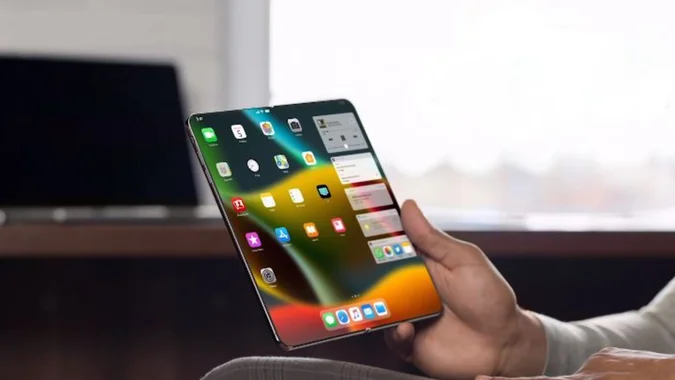
Imagine pulling an iPad mini from your pocket. That’s the promise Apple’s first foldable iPhone appears to be making, according to newly leaked CAD renders that show a device codenamed V68. These detailed schematics, sourced from iPhone-Ticker.de, reveal a folding smartphone that doesn’t just compete with Samsung’s Galaxy Z Fold series but reimagines the entire category around a truly pocketable, tablet-like experience. Set for a potential September 2026 launch, this device could finally deliver what foldable fans have been waiting for, a seamless blend of phone convenience and tablet productivity.
| Metric | Value | Unit | Notes |
|---|---|---|---|
| Outer Display Size | 5.5 | inch | 83.8mm wide, 120.6mm tall when folded |
| Inner Display Size | 7.76 | inch | 167.6 x 120.6mm unfolded |
| Inner Display Resolution | 2,713 x 1,920 | pixels | Near iPad mini density for sharp text |
| Thickness (Folded) | 9.6 | mm | Includes camera bump |
| Thickness (Unfolded) | 4.8 | mm | Excluding camera bump |
| Frame Material | Titanium + Aluminum | — | Mixed construction for durability |
| Camera System | Dual Rear | — | Similar to iPhone 17 setup |
| Front Camera | Under-Display | — | No visible notch on inner screen |
| Expected Launch | September 2026 | — | Based on current supply chain timelines |
The Design That Fits Your Life, Not Just Your Pocket
What strikes you first about these CAD renders isn’t just the folding mechanism, it’s the thoughtful proportions. The 5.5-inch outer display measures 83.8mm wide by 120.6mm tall, creating a wider-than-tall orientation that feels fundamentally different from today’s towering smartphone slabs. This isn’t an accident. That squarer profile makes the device slip into side pockets with surprising ease, and when you grip it horizontally, it feels less like a traditional phone and more like a mini tablet folded in half.
Unfold it, and the transformation is genuinely impressive. The inner screen expands to 167.6 x 120.6mm, delivering a 7.76-inch canvas with 2,713 x 1,920 resolution. That’s nearly identical to an iPad mini’s display area, meaning you get proper split-screen app layouts and comfortable note-taking space. At just 4.8mm thin when open (excluding the camera bump), it’s actually slimmer than Apple’s own ultra-slim iPhone Air models. The engineering here feels deliberate, like Apple studied every complaint about existing foldables and designed solutions rather than compromises.
The Crease-Free Promise That Changes Everything
Here’s where Apple’s approach diverges most dramatically from the competition. While Samsung and others have chased absolute thinness, these CAD renders suggest Apple is prioritizing something more important, a truly crease-free viewing experience. The device measures 9.6mm thick when folded and 4.8mm unfolded, slightly thicker than Samsung’s Galaxy Z Fold 7 at 8.9mm closed and 4.2mm open. But that extra millimeter matters.
It accommodates what appears to be a sophisticated hinge system and display engineering that utilizes laser-drilled microstructures, a technology Samsung reportedly couldn’t perfect. This isn’t just about avoiding a visible line down the middle of your screen, it’s about creating a seamless canvas for media consumption, reading, and creative work. The inner screen features an under-display selfie camera with no visible notch, completing that uninterrupted viewing experience. When you’re watching a movie or scrolling through photos, there’s nothing to distract from the content.
As we’ve seen in previous Apple foldable iPhone CAD leaks, the company appears to be learning from years of competitor missteps. The mixed titanium and aluminum frame suggests a focus on durability that matches Apple’s reputation for build quality. You can almost feel the solid click of the hinge in your mind, that satisfying mechanical precision Apple fans expect.
Camera Strategy and Daily Usability
Camera specs reveal Apple’s typical philosophy, quality over quantity. The dual rear setup appears similar to what we expect from the iPhone 17, prioritizing sensor size and computational photography over adding extra lenses. This makes practical sense for a foldable, where internal space is at a premium. The real innovation might be in how you use those cameras, with the larger inner display serving as an ideal viewfinder for photography and video.
Think about your daily workflow. You’re responding to messages on the outer screen while walking, then unfold the device to edit a document with proper keyboard spacing. You’re watching a video in bed with the device propped up like a tiny laptop, then fold it to slip into your jacket pocket. The wider folded stance actually enables better one-handed use when closed, addressing those common complaints about tall, narrow outer displays on competing foldables.
This attention to ergonomics extends to the software experience too. While not detailed in the CAD leaks, you can imagine how iPadOS features would translate to this form factor. Split View, Slide Over, and Apple Pencil support (if included) could make this a legitimate productivity tool, not just a larger phone. The crease-free iPad mini experience suddenly becomes portable, changing how we think about mobile computing.
How It Stacks Against the Competition
Comparing this to Samsung’s current foldables reveals different design philosophies. Samsung has pushed thickness boundaries with devices like the rumored Galaxy Z Flip 8, prioritizing slimness above all else. Apple seems to be saying, “What if we make it slightly thicker to eliminate the crease entirely?” That’s a tradeoff many users would happily accept.
The camera approach differs too. While Samsung often includes more lenses, Apple’s focus on computational photography and larger sensors could deliver better image quality from fewer cameras. Then there’s the software integration, where Apple’s control over both hardware and iOS could create a more seamless folding experience than Android foldables have managed so far.
But potential buyers should temper their excitement with reality. As we’ve discussed in our coverage of Apple’s supply chain challenges, bringing a device this complex to market at scale won’t be easy. The September 2026 timeline feels ambitious, and even if Apple hits that date, availability might be limited initially. The laser-drilled microstructure technology for the crease-free display represents uncharted manufacturing territory, and yields could impact production volumes.
The Bottom Line for Potential Buyers
If these CAD renders accurately represent Apple’s first foldable iPhone, we’re looking at a device that could redefine the category. It’s not trying to be the thinnest or the one with the most cameras. Instead, it focuses on delivering a complete experience, a pocket-sized iPad mini that doesn’t force you to choose between portability and productivity.
The crease-free display technology alone could be worth the wait for users frustrated with current foldable compromises. Add in Apple’s typical attention to build quality, software integration, and camera performance, and you have a compelling proposition. Yes, it might be slightly thicker than some competitors. Yes, it might arrive later than hoped. But sometimes waiting for the right solution beats settling for what’s available now.
For now, these CAD leaks give us the clearest picture yet of Apple’s folding ambitions. They show a company learning from others’ mistakes rather than rushing to match them. They reveal a device designed around how people actually use technology, not just technical specifications. And they hint at a future where your pocket truly can hold an iPad mini, one fold at a time.