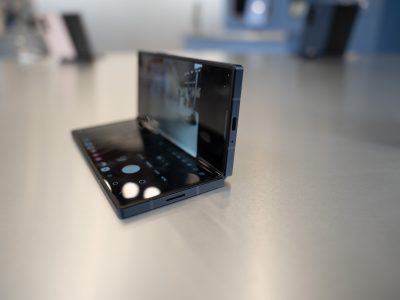
Imagine pulling a device from your pocket that unfolds into something resembling an iPad mini, yet feels completely natural in your hand when closed. That’s the promise emerging from the latest CAD leaks of Apple’s long-rumored foldable iPhone, codenamed V68. These detailed renders give us our clearest look yet at how Apple plans to enter the foldable market, and it’s shaping up to be a thoughtful, deliberate approach rather than a rushed response to competitors.
| Metric | Value | Unit | Notes |
|---|---|---|---|
| Outer Display Size | 5.5 | inch | 83.8mm wide × 120.6mm tall when folded |
| Inner Display Size | 7.76 | inch | 167.6mm × 120.6mm unfolded, 2,713 × 1,920 resolution |
| Thickness (Folded) | 9.6 | mm | Including hinge mechanism |
| Thickness (Unfolded) | 4.8 | mm | Excluding camera bump, thinner than iPhone Air |
| Display Resolution | 2,713 × 1,920 | pixels | Near iPad mini dimensions for split-screen apps |
| Frame Material | Titanium/Aluminum | — | Mixed construction for durability and weight balance |
| Camera System | Dual Rear | — | Similar to iPhone 17, under-display front camera |
| Target Launch | September 2026 | — | Codenamed V68, pending production timelines |
The Pocket-Sized iPad Mini Experience
What immediately stands out about Apple’s approach is the wider-than-tall orientation when folded. At 83.8mm wide and 120.6mm tall, the device slips into side pockets more comfortably than today’s towering smartphone slabs. This isn’t just about fitting in your pocket, though. That squarer profile creates a grip that feels less like a traditional phone and more like a mini tablet folded in half.
When you unfold it, the transformation is genuinely impressive. The 7.76-inch inner screen measures 167.6 × 120.6mm with a sharp 2,713 × 1,920 resolution. That’s nearly identical to an iPad mini’s dimensions, meaning you get proper split-screen app layouts and note-taking capabilities without compromise. Picture yourself on a flight, watching a movie on one side while browsing messages on the other, all on a display that disappears into your jacket pocket when you’re done.
The real magic, according to the crease-free iPad mini experience detailed in these leaks, happens through laser-drilled microstructures in the display assembly. This engineering approach apparently solves the crease problem that has plagued foldables since their inception, something even Samsung hasn’t fully cracked despite multiple generations of refinement.
Engineering Over Thinness
Apple appears to be prioritizing a truly seamless experience over chasing the absolute thinnest profile. At 9.6mm thick when folded and 4.8mm when unfolded (excluding the camera bump), the device is slightly thicker than Samsung’s Galaxy Z Fold 7, which measures 8.9mm closed and 4.2mm open. But that extra millimeter or so accommodates the engineering required for that crease-free display.
The mixed titanium and aluminum frame suggests Apple is serious about durability. Titanium provides strength at critical hinge points while aluminum keeps weight manageable. This isn’t just about surviving drops, it’s about withstanding the thousands of open-close cycles a foldable endures over its lifetime.
That wider folded stance does more than just fit pockets better. It enables genuine one-handed use when closed, addressing one of the most common complaints about competing foldables with their tall, narrow outer displays. You can actually type with one thumb without performing finger gymnastics.
Camera Strategy and Display Innovation
Camera specs reveal Apple’s typical quality-over-quantity approach. The dual rear setup appears similar to what we expect from the iPhone 17, suggesting Apple won’t compromise imaging capabilities for the foldable form factor. More interesting is the inner screen’s under-display selfie camera with no visible notch or punch-hole, creating an uninterrupted viewing experience for media consumption.
Think about watching a movie or playing a game on that expansive 7.76-inch display without any camera cutouts interrupting the view. It’s a small detail that makes a big difference in immersion, especially when you’re using the device in tablet mode.
While Apple’s first foldable iPhone has taken years to materialize, these renders suggest the company has been carefully studying competitors’ mistakes. The wider aspect ratio, crease-free engineering, and thoughtful material choices all point to a product that’s been developed with real-world use in mind, not just technical specifications.
The Samsung Comparison
How does this stack up against the current foldable king? Samsung’s Galaxy Z Fold series has defined the category for years, but Apple’s approach reveals different priorities. Where Samsung has chased thinness aggressively, Apple seems willing to accept slightly more thickness for a better display experience.
The crease-free technology, if it works as described, could be a game-changer. Anyone who’s used current foldables knows that visible crease is always there, reminding you that you’re using a folding screen. Eliminating that would make the device feel more like a single, continuous display rather than two screens joined together.
Camera placement also differs. Samsung typically puts its front camera in a noticeable punch-hole on the inner display, while Apple’s under-display approach keeps the viewing area clean. It’s these subtle but meaningful differences that could define the user experience.
Practical Implications and Timeline
With a target launch of September 2026, there’s still significant development time ahead. The production challenges for a device this complex shouldn’t be underestimated. Manufacturing crease-free displays at scale, ensuring hinge reliability, and maintaining Apple’s typical build quality standards will test even their legendary supply chain.
For consumers, this represents Apple’s characteristic wait-and-see approach. They’ve watched the foldable market develop, identified pain points, and appear to be engineering solutions rather than rushing to market. When this device eventually arrives, it likely won’t be the first foldable iPhone, but it might be the first one that feels completely polished and Apple-ready.
The CAD leak details paint a picture of a device that could genuinely replace both your phone and your small tablet. That 7.76-inch screen isn’t just big, it’s purposefully sized to match iPad mini workflows. The pocket-friendly folded dimensions mean you might actually carry it everywhere, not just when you think you’ll need the larger screen.
What’s most exciting isn’t just the technical specifications, but the potential for this device to make foldables feel normal rather than novel. By focusing on solving actual user problems rather than chasing specs, Apple might finally deliver the foldable experience that makes sense for everyday use. The wait until 2026 suddenly feels like it might be worth it.