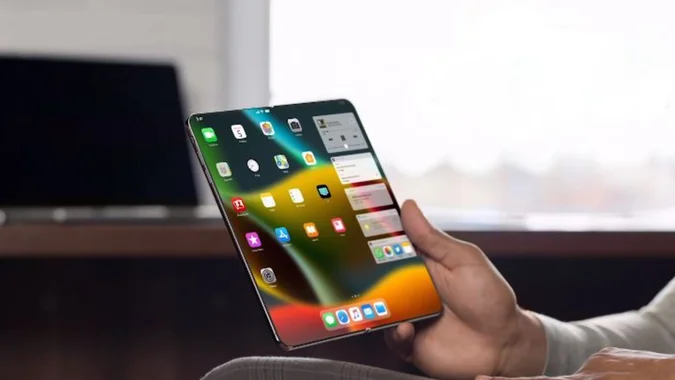
Imagine pulling a device from your pocket that unfolds to reveal a screen nearly matching your iPad mini, yet slips into your jeans as easily as today’s slimmest phones. That’s the promise emerging from leaked CAD files showing Apple’s first foldable iPhone, codenamed V68, and it’s shaping up to be the pocketable tablet experience we’ve been waiting for.
| Metric | Value | Unit | Notes |
|---|---|---|---|
| Outer Display Size | 5.5 | inch | 83.8mm wide × 120.6mm tall when folded |
| Inner Display Size | 7.76 | inch | 167.6mm × 120.6mm unfolded, near iPad mini dimensions |
| Inner Display Resolution | 2,713 × 1,920 | pixels | High-density panel for sharp text and media |
| Thickness (Folded) | 9.6 | mm | Includes hinge mechanism and dual displays |
| Thickness (Unfolded) | 4.8 | mm | Excluding camera bump, thinner than iPhone Air |
| Frame Material | Titanium + Aluminum | — | Mixed construction for durability and weight balance |
| Rear Camera System | Dual Lens | — | Similar to iPhone 17 setup, prioritizing quality |
| Front Camera | Under-Display | — | No visible notch or punch-hole on inner screen |
| Expected Launch | September 2026 | — | Based on current development timeline |
The Engineering Behind the Magic
What makes these leaked renders particularly exciting isn’t just the form factor, it’s how Apple appears to be solving the foldable puzzle differently. While competitors have chased absolute thinness, Apple’s approach seems to prioritize something more valuable, a truly seamless viewing experience.
The device measures 9.6mm thick when folded and 4.8mm when open. That’s slightly thicker than Samsung’s Galaxy Z Fold 7 at 8.9mm closed and 4.2mm open. But here’s the tradeoff that makes sense, that extra millimeter accommodates the engineering required for what might be the industry’s first genuinely crease-free display.
Apple’s solution reportedly uses laser-drilled microstructures in the display layers, a technique that Samsung apparently couldn’t perfect. This isn’t just about hiding a crease, it’s about eliminating the physical stress points that cause them in the first place. Picture unfolding your device to reveal a screen as flat and uniform as your current iPhone, no distracting line down the middle, no uneven reflections.
A Design That Actually Makes Sense in Your Hand
The wider folded stance creates what early reports describe as a “squarer profile.” This isn’t another tall, narrow slab that feels awkward in pockets. Instead, it resembles a mini tablet folded in half, with dimensions that actually work with human anatomy.
That 5.5-inch outer display measures 83.8mm wide by 120.6mm tall. The width-over-height orientation means it slips into side pockets without the top-heavy feeling of today’s towering phones. When you grip it closed, your thumb naturally reaches across the display for one-handed use. When unfolded, you’re holding a 7.76-inch canvas that’s perfect for split-screen apps, note-taking, or watching media without constant zoom adjustments.
This thoughtful design extends to the materials. The mixed titanium and aluminum frame suggests Apple is balancing premium feel with practical durability. Titanium provides structural integrity around the hinge area where stress concentrates, while aluminum keeps the overall weight manageable for daily carry.
How It Stacks Up Against the Competition
When you compare Apple’s approach to Samsung’s current foldable lineup, the philosophical differences become clear. Samsung has pushed thickness boundaries to impressive extremes, but Apple seems willing to accept slightly more bulk to deliver what could be a superior user experience.
The camera system follows Apple’s typical “quality over quantity” approach. A dual rear setup similar to the iPhone 17 suggests they’re focusing on sensor size and computational photography rather than adding extra lenses. The inner screen’s under-display selfie camera means no visible notch or punch-hole, creating that uninterrupted canvas for media consumption that foldable enthusiasts crave.
What’s particularly interesting about Apple’s foldable development is how long they’ve watched the market evolve. While Samsung, Google, and others have iterated through multiple generations, Apple appears to have been studying what works, what doesn’t, and where they can deliver something meaningfully better.
The Daily Reality of Owning One
Let’s talk about what this device would actually feel like in your daily routine. Morning commute, you pull it from your pocket folded, check notifications on the outer screen, maybe respond to a quick message. Coffee break, you unfold it to read an article or watch a video with proper screen real estate. Evening planning, you use split-screen to compare calendars while taking notes.
The 4.8mm thickness when open means it feels remarkably slim in tablet mode, potentially beating even Apple’s own ultra-slim iPhone Air. The crease-free display means you’re not constantly aware of the folding mechanism, your brain accepts it as a single, continuous surface.
Battery life will be the big question mark, as foldables historically struggle with power management across two displays. But if Apple’s recent iPhone battery improvements are any indication, they’ve likely been working on efficient power distribution and larger cell capacities within that compact form.
Supply Chain Realities and What to Expect
With a rumored September 2026 launch, there’s still significant development time ahead. The display technology alone, those laser-drilled microstructures, represents a manufacturing challenge that could affect initial availability. As we’ve seen with previous Apple product launches, complex new technologies often face supply constraints in early production cycles.
Pricing will be another critical factor. Given the advanced display technology and premium materials, this won’t be an entry-level device. But if Apple positions it as replacing both your iPhone and iPad mini for certain users, the value proposition becomes more compelling.
Why This Could Change How We Think About Mobile Devices
What’s most exciting about these leaks isn’t just the specifications, it’s the potential shift in how we use our devices. For years, we’ve accepted compromises, big screens that don’t fit in pockets, or pocketable devices with screens too small for real work.
This Apple foldable represents a genuine attempt to bridge that gap. It’s not just making a phone that folds, it’s rethinking what a mobile computer should be when display technology finally allows the form factor we’ve imagined for decades.
The wider tech industry will be watching closely. If Apple successfully delivers that crease-free experience, it could push the entire foldable market toward prioritizing display quality over mere thinness. And for consumers, it might finally deliver on the promise of having a truly capable tablet experience that actually fits in your pocket when you’re done using it.
As these CAD files suggest, the future of mobile computing might not be about choosing between a phone and a tablet, but carrying a single device that transforms between both as needed. And if anyone can make that transition feel seamless and inevitable, it’s the company that’s spent years perfecting how technology fits into our daily lives.