Remember when foldable phones felt like carrying around miniature laptops in your pocket? Samsung apparently does, and they’re determined to fix that. The latest whispers about the Galaxy Z Flip 8 suggest the company is going all in on creating a flip phone that doesn’t just fold, but disappears into your life. We’re talking about a device that could finally make that awkward bulge in your jeans a thing of the past.
| Metric | Value | Unit | Notes |
|---|---|---|---|
| Folded Thickness | ~6 | mm | Rumored measurement, approximately 10% thinner than Z Flip 7 |
| Unfolded Thickness | ~12 | mm | Exact measurements still speculative |
| Weight | 170 | g | Lighter than most standard slab smartphones |
| Processor (SoC) | Exynos 2600 | — | 2nm process technology, same as expected Galaxy S26 chip |
| RAM / Storage | 12 / 256-512 | GB | LPDDR5X RAM expected, UFS 4.0 storage |
| Battery Capacity | 4,300 | mAh | Meaningful bump from previous models |
| Display Technology | Dynamic AMOLED | — | With improved crease reduction and durability |
| Cover Display | ~3.4 | inch | Expected similar size to Z Flip 7 with enhanced functionality |
| Hinge Durability | 200,000+ | cycles | Improved hinge mechanism for longer lifespan |
| Launch Price | $1,100 | USD | Expected to match Z Flip 7 launch pricing |
| Estimated Launch | Summer 2026 | — | Likely July based on Samsung’s typical schedule |
The Pocket Revolution: Design That Actually Disappears
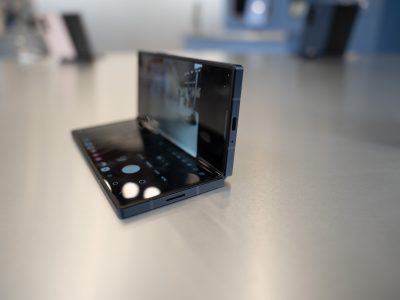
Picture this: you’re reaching for your phone in those slim fit jeans, and instead of wrestling with a chunky rectangle, your fingers find something sleek and compact. That’s the promise of the Z Flip 8’s rumored dimensions. At around 6mm when folded and 12mm unfolded, we’re looking at what could be Samsung’s thinnest flip phone to date. That’s roughly 10% slimmer than the already impressive Z Flip 7.
The weight tells an even more compelling story. At about 170 grams, the Z Flip 8 would actually be lighter than most traditional smartphones, despite packing two screens and a sophisticated hinge mechanism. It’s a subtle but meaningful shift in the foldable narrative, moving from “look what we can make” to “feel how good this is to use.”
This push toward ultra slim foldables isn’t just about vanity metrics. It’s about daily comfort, about a device that doesn’t announce its presence every time you sit down. The engineering challenge here is monumental, balancing thinness with structural integrity and battery capacity, but if these rumors hold, Samsung might have found that sweet spot.
Display Evolution: The Crease That Almost Isn’t
Let’s talk about the elephant in the room, or rather, the line down the middle of your screen. The visible crease has been the Achilles’ heel of foldables since day one. Samsung knows this, and word is they’re making significant strides with the Z Flip 8’s display technology.
We’re likely looking at another generation of Samsung’s Ultra Thin Glass (UTG) with improved polymer layers. The goal isn’t just to make the crease less visible, though that’s part of it. They’re working on making the entire display more durable, more resistant to the microscopic stresses of folding and unfolding thousands of times.
From a user perspective, imagine running your finger across the screen and feeling something closer to a traditional glass surface. The haptic feedback, the way light plays across the surface, the subtle tactile satisfaction of a smooth swipe, all these little details add up to make a display feel premium rather than experimental.
Performance Without Compromise
Here’s where things get really interesting. The Z Flip 8 is rumored to pack the Exynos 2600 chipset, built on a cutting edge 2nm process. This isn’t some watered down foldable specific processor, it’s the same silicon expected to power the Galaxy S26 series. That’s a big deal.
For those not immersed in chip architecture, the 2nm process essentially means more transistors packed into the same space, which translates to better performance with lower power consumption. Pair that with 12GB of RAM, and you’ve got a foldable that doesn’t ask you to compromise on multitasking or gaming performance.
Storage options should start at 256GB and go up to 512GB, using Samsung’s own UFS 4.0 technology. That’s the same fast storage you’d find in their flagship slabs, ensuring apps load quickly and file transfers don’t leave you waiting.
Battery Life That Keeps Up With Your Day
The rumored 4,300mAh battery represents a meaningful bump from previous models. In practical terms, think about your typical day: morning scroll through social media, video calls through the afternoon, navigation on your commute, maybe some mobile gaming in the evening. The Z Flip 7 already improved battery life over earlier foldables, and this next step should get you comfortably through that full day without hunting for a charger by dinner time.
What’s particularly smart here is how Samsung appears to be balancing battery capacity with that slim form factor. They’re not just throwing more milliamp hours at the problem, they’re optimizing power efficiency at the chip level, display level, and software level. It’s a holistic approach that recognizes battery life isn’t just about size, it’s about intelligent management.
Software That Understands Folding
Hardware is only half the story. Samsung’s One UI has evolved significantly around the foldable experience, and by 2026 we can expect even more refined software integration. The cover display should become more functional, not just showing notifications but allowing meaningful interactions without unfolding.
Think about quick replies, music controls, camera framing, all accessible on that smaller screen. Then when you do unfold, apps should transition seamlessly between aspect ratios, taking advantage of the larger canvas without awkward scaling or cropping.
Long term software support will be crucial too. Samsung has been leading the Android space with update promises, and foldable buyers will expect that same commitment. Four years of major OS updates plus security patches should be the baseline for a device at this price point.
Pricing, Competition, and The Bigger Picture
At around $1,100, the Z Flip 8 would maintain pricing parity with its predecessor. That keeps Samsung competitive against Motorola’s Razr lineup while maintaining that premium positioning. It’s a smart strategy, recognizing that early adopters have paid the innovation tax, and now it’s about delivering value.
The foldable market is heating up in interesting ways. While Samsung refines the flip form factor, others are exploring different approaches. Apple’s rumored foldable iPhone faces its own challenges, particularly around supply chain and durability. Meanwhile, Chinese manufacturers continue to push the envelope on pricing and feature experimentation.
Samsung’s advantage here is experience. They’ve been through multiple generations of foldables, learning from hinge failures, display issues, and software quirks. That institutional knowledge translates to a more polished product, even if it sometimes means being slightly conservative with radical changes.
The Foldable Future, Refined
If these Galaxy Z Flip 8 rumors pan out, we’re looking at something significant, not revolutionary in the flashy sense, but evolutionary in the way that matters most for daily use. This could be the foldable that doesn’t feel like a compromise, that doesn’t ask you to trade performance for portability or durability for design.
It’s about that moment when you pull the phone from your pocket, feel the satisfying snap of the hinge, and unfold a screen that just works like a screen should. No awkward thickness, no visible compromises, just a smartphone that happens to fold. That’s the promise Samsung seems to be chasing, and if they deliver, the Z Flip 8 might finally make foldables feel not just novel, but normal. And sometimes, normal is exactly what revolutionary technology needs to become truly useful.
We’ll be watching for more concrete details as we move closer to that expected summer 2026 launch. Until then, the rumors paint an exciting picture of a foldable future that’s getting thinner, lighter, and more refined with each generation.