Remember that awkward bulge in your pocket from early foldables? Samsung apparently does too, and they are determined to make you forget it ever existed. The latest Galaxy Z Flip 8 rumors suggest the company is going all in on slimming down its signature flip phone, potentially delivering the thinnest, lightest, and most refined version we have seen yet. If these leaks hold true, the Z Flip 8 could finally achieve the pocket friendly portability that has been the holy grail since the original model launched.
| Metric | Value | Unit | Notes |
|---|---|---|---|
| Folded Thickness | ~6 | mm | Rumored measurement; represents major slim-down |
| Unfolded Thickness | ~12 | mm | Rumored; clarification needed on typical foldable geometry |
| Weight | 170 | g | Lighter than most standard slab phones |
| Processor (SoC) | Exynos 2600 | — | 2nm process technology; same as expected Galaxy S26 |
| RAM / Storage | 12 / 256-512 | GB | LPDDR5X RAM expected; UFS 4.0 storage |
| Battery Capacity | 4,300 | mAh | Meaningful bump from previous generation |
| Launch Price | ~1,100 | USD | Expected to match Z Flip 7 launch pricing |
| Expected Launch | Summer | 2026 | Likely July, following Samsung’s typical schedule |
The Pursuit of Pocket Perfection
Slip your hand into your jeans pocket. Feel that? Probably your current phone, a wallet, maybe some keys. Now imagine a device that takes up less space than any of those, yet unfolds to give you a full sized screen for watching videos, scrolling social media, or getting work done. That is the promise Samsung seems to be chasing with the Z Flip 8, and the rumored dimensions are a big part of the story.
The leaked figures, around 6mm when folded and 12mm unfolded, represent roughly a 10 percent reduction in thickness compared to the Z Flip 7. There is an important technical note here that often causes confusion. Most foldables are thicker when folded because you are essentially stacking two halves of the phone together. The current Z Flip 7 measures about 15.1mm folded and 6.9mm unfolded. So if the rumor of “6mm folded” is accurate, it would indicate a revolutionary hinge and internal stacking design. It is possible the numbers are simply reported backwards, a common error in early leaks. Either way, the direction is clear: Samsung wants this phone to disappear in your pocket.
The weight drop to about 170 grams is equally significant. For context, that is lighter than Apple’s iPhone 15 Pro (187g) and many other flagship slab phones, despite the Z Flip 8 packing two screens and a complex hinge mechanism. This is where materials science and supply chain mastery come into play. Samsung has been working with partners to develop thinner, stronger ultra thin glass (UTG) for the main display and lighter aluminum alloys for the frame. The haptics, those subtle vibrations that make typing and interactions feel satisfying, are also reportedly getting an upgrade to match the premium build.
Display and Durability: Addressing the Elephant in the Room
Every conversation about foldables eventually hits two pain points: the screen crease and long term durability. Samsung knows this, and the rumors suggest the Z Flip 8 will feature a redesigned hinge with a tighter radius to minimize that visible line down the middle of the display. The goal is not necessarily to eliminate it completely that is a physics challenge with current flexible OLED technology but to make it so subtle you stop noticing it during daily use.
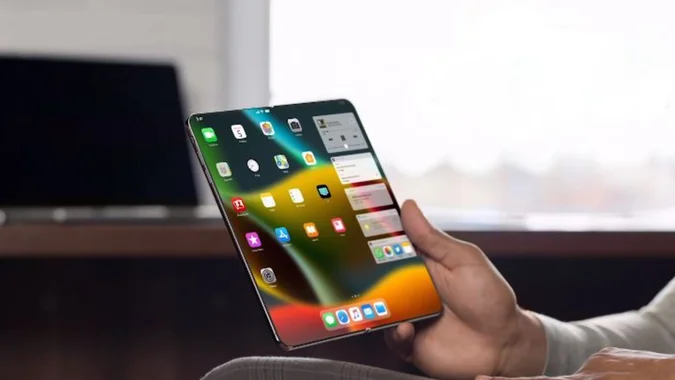
Durability improvements are said to focus on both the hinge mechanism and the display layers. Expect better dust resistance, possibly an improved IP rating, and more robust testing for fold cycles. Samsung wants you to flip this phone open and shut for years without a second thought, moving foldables from novel gadgets to daily drivers. This puts them in direct competition with other players entering the space, like the much discussed Apple foldable iPhone concepts that are also chasing a crease free experience.
Performance That Does Not Compromise
Under the hood, the Z Flip 8 is rumored to pack Samsung’s next generation Exynos 2600 chipset, built on an advanced 2 nanometer (2nm) manufacturing process. This is the same silicon expected to power the Galaxy S26 series, which tells you Samsung is not treating its flip phone as a secondary device. The 2nm process is a big deal it means transistors are packed more densely, improving performance and energy efficiency simultaneously.
Paired with 12GB of LPDDR5X RAM, this setup should handle serious multitasking. Think about having your navigation app open on the cover screen while the main display shows a YouTube tutorial, all without stuttering. Storage options starting at 256GB and going up to 512GB provide ample space for apps, photos, and 4K videos. The internal storage will almost certainly use the fast UFS 4.0 standard, making app installs and file transfers feel instantaneous.
Battery Life You Can Actually Trust
Here is where the consumer angle becomes critical. A slim, beautiful phone is useless if it dies by lunchtime. The rumored 4,300mAh battery in the Z Flip 8 represents a meaningful bump from its predecessor. In practical terms, this should translate to a full day of use with a mix of social media, messaging, some camera use, and maybe a video call or two. You should not be hunting for a charger by dinner time.
This focus on endurance mirrors a broader trend in the industry, where even mid range devices like the OnePlus 15R are prioritizing battery life that lasts all day and then some. Samsung’s challenge is fitting this larger battery into a slimmer chassis, which likely involves using higher density battery cells and optimizing the internal layout around the folding mechanism.
Pricing, Positioning, and the Big Picture
Samsung is expected to hold the line on pricing, with the Z Flip 8 launching around the $1,100 mark. This keeps it competitive against Motorola’s Razr lineup and maintains the premium positioning of the Flip series. In a market where compelling devices like the Xiaomi Redmi Note 15 offer incredible value at lower price points, Samsung’s strategy is clear: deliver an unmatched foldable experience that justifies the cost through design, durability, and performance.
Looking at the broader landscape, the rumored summer 2026 launch timeline (likely July) gives Samsung time to refine the design and manufacturing process. It also positions the Z Flip 8 to benefit from the mature 2nm chip production and potentially new display technologies that will be available next year.
If these rumors pan out, the Galaxy Z Flip 8 could represent a turning point. It would not just be another iteration, but the device that finally makes the flip phone form factor feel truly seamless, reliable, and most importantly, pocketable. The days of the folded brick might finally be coming to an end.